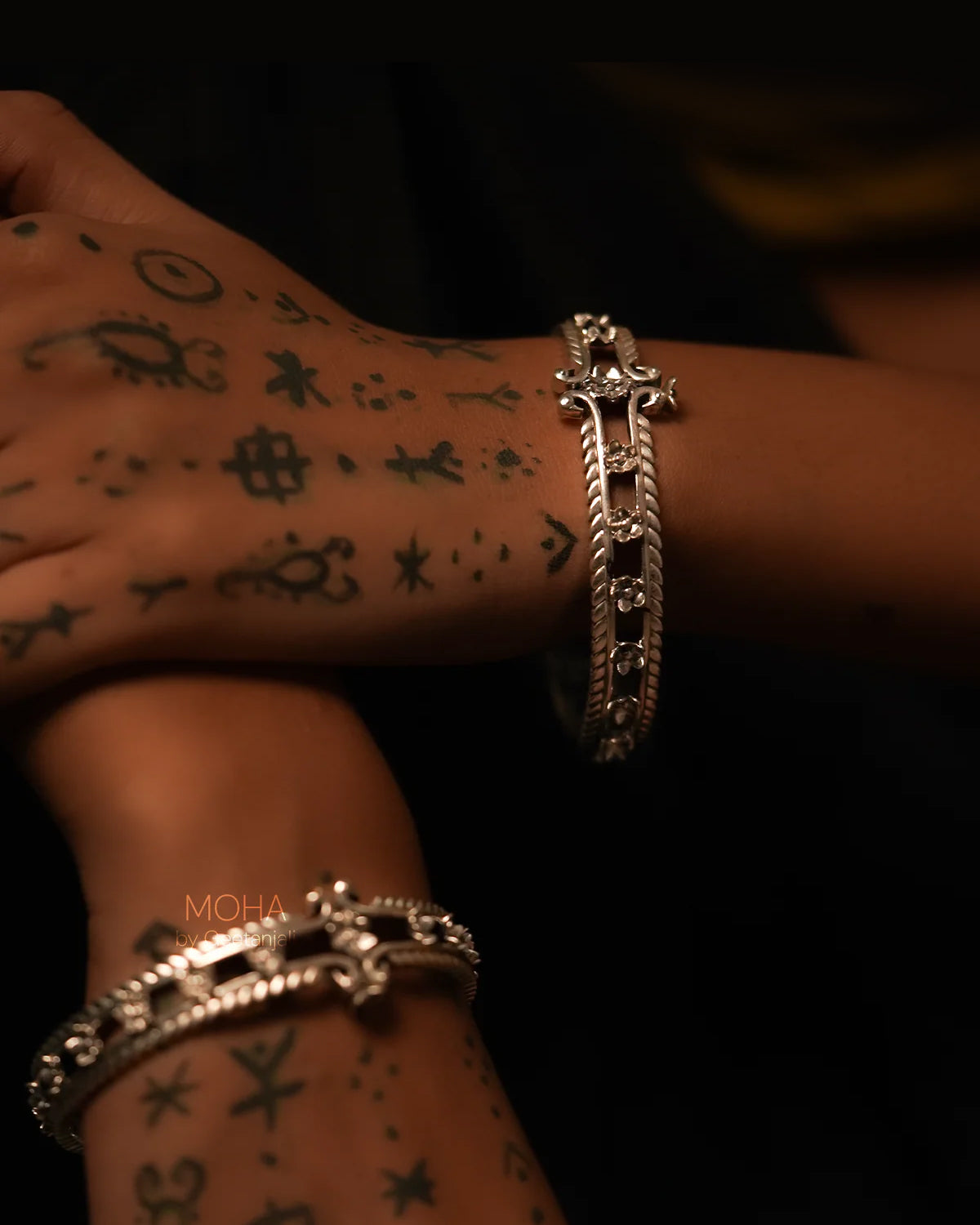
jewellery is more than an accessory—it reflects personal style, celebrates milestones, and often carries sentimental value for years to come. Yet many buyers overlook one important factor before making a purchase: how the jewellery is made.
Understanding the difference between handcrafted jewellery and machine-made jewellery can help you choose pieces that align with your expectations for quality, craftsmanship, durability, and long-term value.
Whether you are shopping for Handcrafted Silver Jewellery, Sterling Silver Jewellery, or a meaningful gift, this guide explains the key differences, how to identify genuine craftsmanship, and which option may be right for you.
What Is the Difference Between Handcrafted and Machine-Made Jewellery?
Handcrafted jewellery is created and finished by skilled artisans using traditional jewellery-making techniques and manual craftsmanship. Each piece receives individual attention during various stages of production.
Machine-made jewellery is produced using automated manufacturing processes designed to create large quantities of identical pieces quickly and efficiently.
The main difference lies in the level of human involvement. Handcrafted jewellery emphasizes artistry, individuality, and detailed finishing, while machine-made jewellery focuses on consistency, scalability, and affordability.
Why the Manufacturing Process Matters
When comparing jewellery, many buyers focus only on design and price. However, the production method can directly impact:
Knowing how jewellery is made helps you make a more informed purchasing decision.
What Is Handcrafted Jewellery?
Handcrafted jewellery is created through a combination of traditional techniques, artisan expertise, and manual finishing processes.
Depending on the design, artisans may:
-
Shape and form silver by hand
-
Create intricate patterns and detailing
-
Hand-finish surfaces and textures
-
Set stones individually
-
Apply oxidisation and polishing techniques
-
Perform detailed quality inspections
Because each piece is crafted individually, no two pieces are ever completely identical.
Small variations are often considered a hallmark of authentic craftsmanship rather than imperfections.
Characteristics of Handcrafted Jewellery
-
Individually finished by artisans
-
Unique detailing and character
-
Greater design flexibility
-
Small-batch production
-
Heritage-inspired craftsmanship
-
Higher attention to finishing quality
What Is Machine-Made Jewellery?
Machine-made jewellery is manufactured using automated systems and production technologies that enable large-scale manufacturing.
This production method is commonly used for:
The primary advantage of machine manufacturing is consistency, where every piece looks nearly identical.
Characteristics of Machine-Made Jewellery
Handcrafted vs. Machine-Made Jewellery: Key Differences
1. Craftsmanship and Detailing
Handcrafted jewellery allows artisans to create intricate details that may be difficult to replicate through automated production.
Human craftsmanship enables adjustments throughout the process, resulting in richer textures, finer detailing, and more character.
Machine-made jewellery offers precision and consistency but often lacks the depth of artisan finishing.
Best Choice: Handcrafted Jewellery
2. Uniqueness
One of the strongest advantages of handcrafted jewellery is individuality.
Every handcrafted design carries subtle differences that make it unique.
Machine-made jewellery is designed to be replicated identically across thousands of units.
If exclusivity matters to you, handcrafted jewellery offers significantly more uniqueness.
Best Choice: Handcrafted Jewellery
3. Quality Control
Handcrafted jewellery typically undergoes individual inspection and finishing before reaching customers.
Artisans often evaluate:
-
Surface finishing
-
Structural strength
-
Stone placement
-
Comfort and wearability
Machine-made jewellery relies primarily on standardised production systems and batch quality checks.
Best Choice: Handcrafted Jewellery
4. Durability
Durability depends on design, material quality, and construction methods.
Well-crafted handmade jewellery often benefits from greater attention during assembly and finishing.
However, both handcrafted and machine-made jewellery can be durable when produced using quality materials and proper manufacturing standards.
5. Price
Handcrafted jewellery generally costs more because it requires:
Machine-made jewellery is often more affordable because production costs are distributed across larger quantities.
Best Choice: Depends on Budget
6. Customisation
Customisation is one area where handcrafted jewellery excels.
Artisans can often modify:
-
Design details
-
Sizing
-
Engravings
-
Finishing styles
Machine-made jewellery typically offers fewer customisation options.
Best Choice: Handcrafted Jewellery
How to Identify Genuine Handcrafted Jewellery
Many products marketed as handmade may still rely heavily on machine production.
Before purchasing, look for the following signs:
Look for Natural Variations
Authentic handcrafted jewellery may display slight differences in:
-
Texture
-
Pattern placement
-
Finishing details
-
Surface character
Perfect uniformity often indicates machine production.
Examine the Detailing
Handcrafted pieces frequently showcase:
Verify Silver Purity
When purchasing Sterling Silver Jewellery, check for:
You can learn more through our 925 Silver Hallmark Guide.
Ask About the Production Process
Reputable jewellery brands should be transparent about:
-
How the jewellery is made
-
Whether artisans are involved
-
What stages are completed by hand
How We Evaluate Jewellery Craftsmanship a expert Checklist
When assessing handcrafted jewellery, several quality indicators help determine craftsmanship standards.
Craftsmanship Checklist
✓ Smooth and refined finishing
✓ Secure stone settings
✓ Consistent silver thickness
✓ Durable clasps and closures
✓ Comfortable wearability
✓ Balanced design proportions
✓ Proper hallmarking
✓ High-quality polishing and oxidisation
These indicators often reveal more about quality than appearance alone.
Why More Buyers Are Choosing Handcrafted Jewellery
Consumer preferences are shifting toward authenticity, craftsmanship, and mindful purchasing decisions.
Many buyers today value:
-
Artisan-made products
-
Traditional craftsmanship
-
Small-batch production
-
Heritage-inspired designs
-
Long-term sentimental value
This growing appreciation for craftsmanship has increased demand for Handcrafted Silver Jewellery and Traditional Silver Jewellery across modern and heritage-inspired collections.
Explore Our Silver Earrings Collection

Parna Silver Ear-Climber By MOHA
Buy Now

Chiraiya Silver Earrings by MOHA
Buy Now

Noorani Silver Sui Dhaga Earrings by MOHA
Buy Now

William Morris - Strawberry Thief Dangling Partners Silver Earrings
Buy Now

Triloki Silver Stud Earrings by MOHA
Buy Now
Why We Value Craftsmanship at MOHA by Geetanjali
At MOHA by Geetanjali, we believe jewellery should reflect both artistry and individuality.
Many of our designs incorporate hand-finishing techniques that help preserve traditional craftsmanship while maintaining the quality standards expected from modern silver jewellery.
From heritage-inspired designs to contemporary pieces, our collections celebrate the craftsmanship that makes jewellery meaningful.
Explore our:
-
Silver Jewellery Collection
-
Maharashtrian Jewellery Collection
-
Silver Earrings Collection
-
Silver Toe Rings Collection
-
Traditional Silver Jewellery Collection
Which Type of Jewellery Should You Choose?
Choose handcrafted jewellery if you:
-
Value craftsmanship and artistry
-
Prefer unique designs
-
Appreciate traditional techniques
-
Want personalised jewellery
-
Seek long-term sentimental value
Choose machine-made jewellery if you:
Recommended Handcrafted Jewellery

Kolhapur Saaj Necklace Gold Plated by MOHA
★★★★★ (4.9)
Shop Now

Kolhapur Saaj (26 Inch) Necklace Gold Plated by MOHA
★★★★★ (4.9)
Shop Now

Bhawara Silver Pendant by MOHA
★★★★★ (4.8)
Shop Now

Alpana Silver Pendant with Chain by MOHA
★★★★★ (4.9)
Shop Now

Abhishek Lakshmi Silver Necklace by MOHA
★★★★★ (4.8)
Shop Now
Final Thoughts
Both handcrafted and machine-made jewellery have their place in today's market.
However, if you value individuality, craftsmanship, attention to detail, and meaningful design, handcrafted jewellery offers an experience that goes beyond appearance alone.
Understanding how jewellery is made helps you choose pieces that align with your style, expectations, and long-term appreciation for quality craftsmanship.
Frequently Asked Questions
Is handcrafted jewellery better than machine-made jewellery?
Handcrafted jewellery offers greater uniqueness, artisan detailing, and personal character, while machine-made jewellery provides consistency and affordability.
How can I tell if jewellery is genuinely handcrafted?
Look for natural variations, artisan detailing, hand-finishing techniques, transparent production information, and quality hallmarking.
Why is handcrafted jewellery more expensive?
The cost reflects skilled labour, craftsmanship, production time, detailed finishing, and smaller production volumes.
Is handcrafted sterling silver jewellery worth buying?
For buyers who value craftsmanship, uniqueness, and long-term sentimental value, handcrafted sterling silver jewellery is often considered a worthwhile investment.
Does handcrafted jewellery last longer?
When created using quality materials and proper construction techniques, handcrafted jewellery can provide excellent durability and long-term wear.
What is the 2:1:1 rule for jewellery?
The 2:1:1 jewellery rule is a styling guideline that recommends wearing two simple jewellery pieces, one statement piece, and one complementary accessory to create a balanced and elegant look. It helps prevent over-accessorising while maintaining a cohesive appearance.
What is the difference between handmade and machine-made jewellery?
Handmade jewellery is created and finished by skilled artisans using manual techniques, giving each piece unique details and character. Machine-made jewellery is produced using automated manufacturing processes, resulting in identical designs that can be made quickly and at a lower cost.
Is handmade jewellery better than machine-made jewellery?
Handmade jewellery is often considered better for those who value craftsmanship, uniqueness, and artisan detailing. Machine-made jewellery may be a better option for buyers seeking affordability, consistency, and mass-produced designs. The best choice depends on individual preferences and budget.
Which is better, handcrafted or handmade jewellery?
Neither is universally better, but handcrafted jewellery typically involves a higher level of artisan involvement throughout the production process. Handmade jewellery may include some machine-assisted steps, while handcrafted jewellery often emphasizes traditional craftsmanship, detailed finishing, and individuality.
What are the 5 C's of jewellery?
The 5 C's of jewellery commonly refer to the key factors used to evaluate gemstones and overall jewellery quality:
-
Cut – How well a gemstone is shaped and polished.
-
Colour – The gemstone's colour quality and consistency.
-
Clarity – The presence or absence of internal or external imperfections.
-
Carat – The weight and size of the gemstone.
-
Craftsmanship – The quality of the jewellery's design, setting, and finishing.
What is a divorce ring?
A divorce ring is a piece of jewellery worn to symbolize a new chapter after the end of a marriage. Similar to how a wedding ring represents commitment, a divorce ring represents independence, personal growth, resilience, and moving forward after divorce. Some people redesign their original wedding jewellery into a new piece, while others purchase a completely new ring to mark the transition.
How can I tell if jewellery is genuinely handcrafted?
You can identify handcrafted jewellery by looking for subtle variations in detailing, artisan finishing techniques, intricate craftsmanship, and transparency about the production process. Genuine handcrafted pieces are rarely perfectly identical and often showcase the individuality of the artisan's work.
Why is handcrafted jewellery more expensive?
Handcrafted jewellery typically costs more because it requires skilled labour, manual finishing, detailed craftsmanship, and longer production times. The price reflects the expertise and effort involved in creating each piece rather than mass-production efficiency.
Is handcrafted jewellery worth buying?
Yes, handcrafted jewellery is often worth buying for those who value uniqueness, craftsmanship, personalization, and long-term sentimental value. Many buyers appreciate the artistry and individuality that handcrafted pieces offer compared to mass-produced alternatives.